Digital Transformation Dinner: Bristol, Ten Businesses, and Why I’m Doing It Again
Published: Feb 2, 2026
Last Updated: Feb 2, 2026
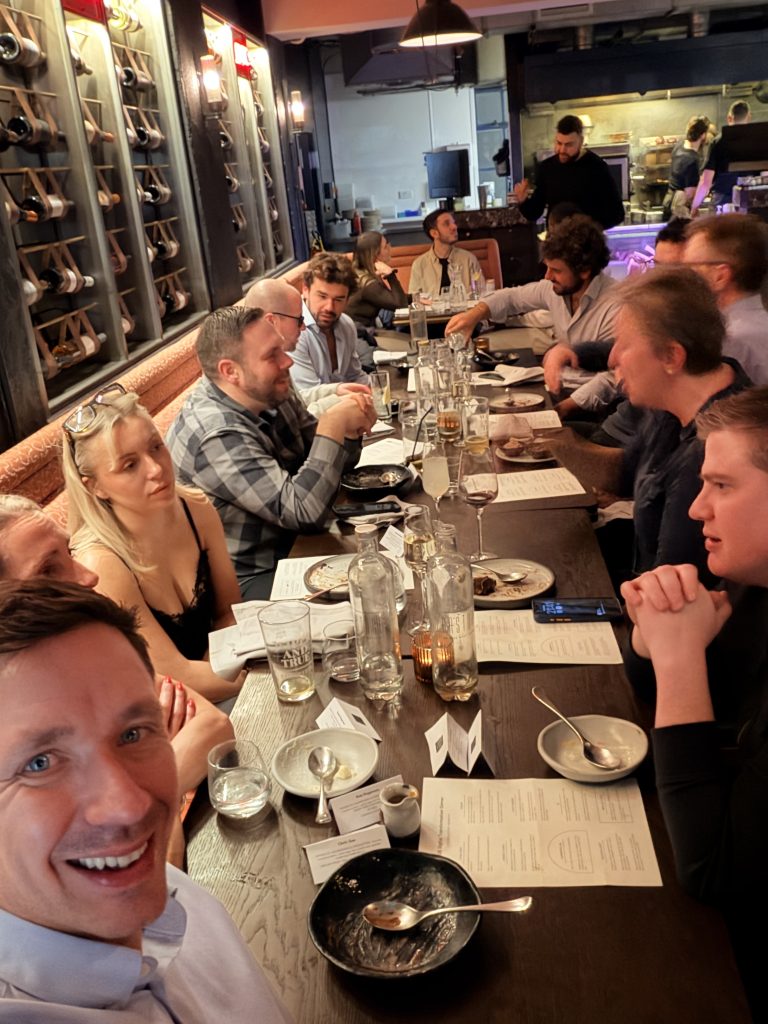
I hosted a dinner for ten businesses in and around Bristol and Bath. Revenue across the room ran from a couple of million to five hundred million. The point was simple: an opportunity to learn, swap notes, and discuss candidly.
The atmosphere landed straight away. Good bonding, real positivity. Interesting people sharing their time and knowledge. This is what I want these evenings to be, and why I’m running more.
I really enjoyed the evening and meeting some genuinely interesting people.
Cracking dinner last night. Thank you so much.
Thanks for last night. A really enjoyable evening
Thank you so much for organising and inviting us to dinner last night.
It was really refreshing to have candid conversations with people who genuinely wanted to be there and share.
It was an interesting bunch of people. I am only sad about the fact that I didn’t get to listen to what you were explaining to the others about AI.
Who was there and how the evening ran

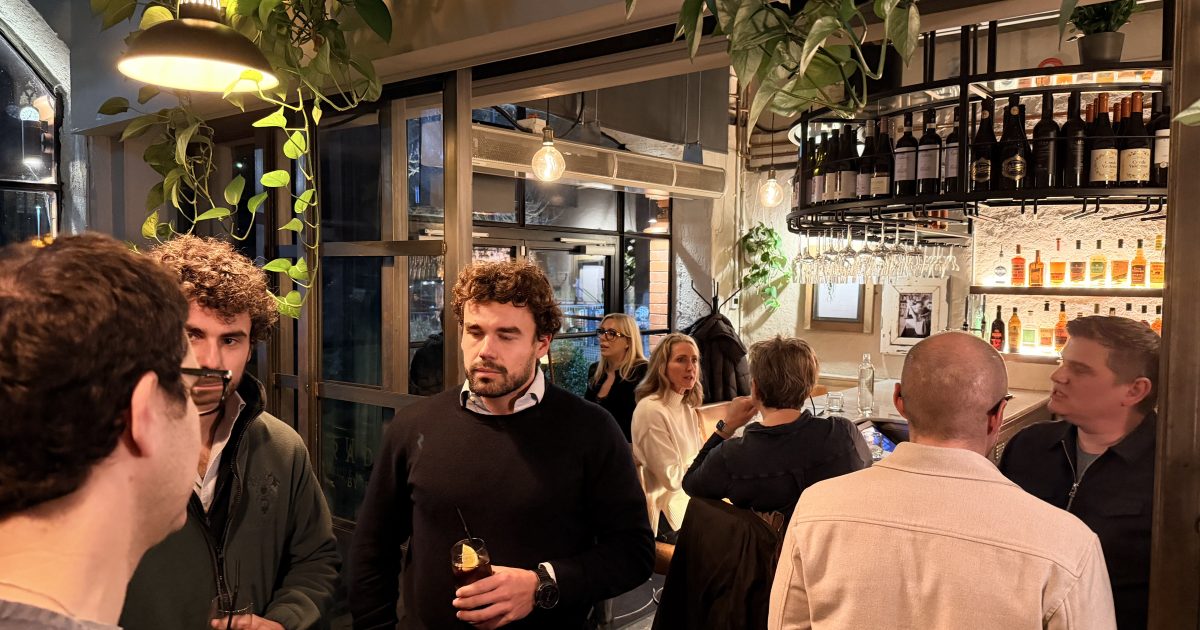
We started with welcome drinks in the small private bar at Pasture Bristol, the iconic steak restaurant.
The building has history for me: I very much enjoyed the Byzantium restaurant when it was there, and I went to St Mary Redcliffe school, so I enjoy being in this area of Bristol.
Upstairs, the seating was left to fate. I gave the Pasture team no instructions. They laid the table, and we sat where we sat.
What we actually talked about
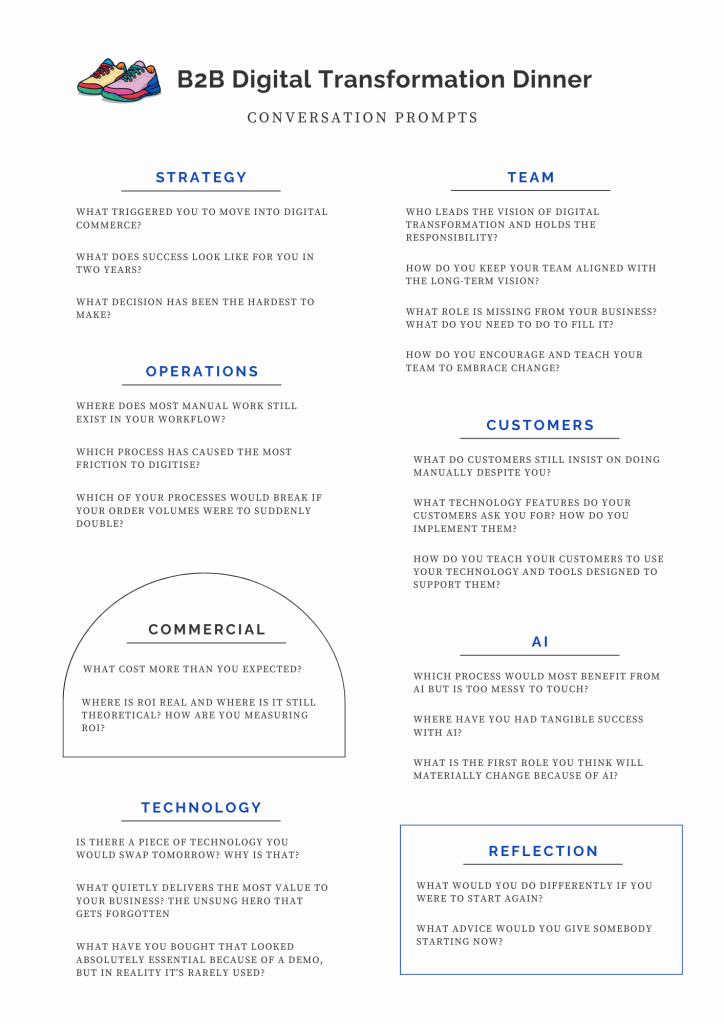
On each place, alongside the glass of Prosecco, was a conversation prompt card I had made. An attempt to get the conversation going and towards some of the hard-hitting questions.
I was pleased to see guests using them and having fun. Next time, I’ll do it a little differently and help people get more from the cards.
We didn’t have a private room, so I didn’t want to play Michael Scott at the Dundies and interrupt every group. With a bit of structure up front, the cards could do more without me hovering over them.
AI was the big hitter. Someone said, “We don’t have the right people to use it.” That led to a question: if AI behaves more like a person that needs training, patience and guidance rather than “coding”, could it be a real asset in the hands of someone who is an excellent trainer? Are we hiring for devs when we should be hiring for teachers?
Customers came up a lot. Telephone orders going wrong on quantity, and how CPQ can help.
One story: a CPQ project went 10x over budget and two years longer, but the system pays back again and again. Cost to serve is down; speed and margin are up.
Another angle: instead of accepting orders over the phone, send a confirmation for checkout and cut chargebacks.
Then the war stories. Amazon and returns: a customer sent back two Coke bottles filled with water to mimic an expensive vacuum cleaner. Amazon refunded, sent the “item” to the supplier, and left the merchant to chase the customer through small claims.
Automated packing machines and the pain of ERP integrations when you need extra scanning.
Being sold a platform the month it was withdrawn from sale and support, leaving a business locked to an ERP and a proprietary site without the features they need.
The price of RAM. What used to cost £56 is now £750, and that’s before landed cost. Suppliers used to hold stock in the channel; now they don’t. Big AI is buying RAM for data centres that won’t exist for years, and prices are inflated.
Same pattern as the dinner conversation about cubic cost of warehouse space: how do you work out if it’s worth keeping stock and for how long? If you hold a part for a machine for five years, should the price go up to reflect storage?
And the flip side: spare parts and compatibility knowledge. A £25m, a £20m and a £500m business, each with hundreds of thousands of SKUs, all facing the same challenge of documenting what works with what.
The rest of the mix.
- E-invoicing for manufacturers: being pushed into digital tools even when you have four customers. They do EDI; you have to if you want their business.
- Engineer suppliers and the headaches of anodising black to Mil-Def spec.
- Robotics in the warehouse: pick-and-pack minions. I’ll be sharing a video on that soon.
- Master distributor arrangements and finding loopholes.
- The ethics of changing SKUs on compatible parts to get a markup, or charging more when you use the item in a repair.
- And the big one: should I sell, find an MD, or just sit pretty?
That’s just what I got caught in and overheard. The conversations were varied, real and shared.
Why the mix of businesses works
With that spread of size and sector, there’s always something to learn. Where we might be “ahead” in one area, there are others we want to improve. It isn’t always the bigger company or the one in our sector that has the answer.
What’s in it for me
Knowledge. I hear real problems that go beyond my own client base. I hear how other agencies, consultants and experts are solving them, how businesses perceive the challenge, and how much they invest in change.
Community. The network grows. I know who to call when something is needed. My tumble dryer broke the evening before dinner. I found myself sitting next to a buyer of washing machine and tumble dryer spares. They were also a customer of one of my clients, and they both use the same ERP. They’re now swapping war stories. Small world, eh?!
The same principle applies to platform selection, integration, and “who do you know who’s done this?”
Sharing. I don’t want to be the centre of attention at these dinners, but it’s hard not to talk when I’m privileged enough to get a near-constant stream of global B2B eCommerce knowledge. I do want to share it. I want people to learn from the stories I hear on my travels. Equally, I need to learn and hear shared stories in return, and create a platform for sharing directly amongst peers.
I’ll keep advocating for networking and community. I’ll keep investing in these dinners as a way for the B2B eCommerce industry to thrive.
Birmingham and London next, ahead of B2B eCommerce World
There are dinners planned for Birmingham and London in the run-up to B2B eCommerce World.
If you’d like to be at one, message me.
Chris Gee
I am Founder & CEO of Rixxo, CTO and a Global Director of the B2B eCommerce Association and Tullio CC South West Captain. As a B2B eCommerce expert I am passionate about sharing my SPIN APE framework enabling businesses to make great B2B eCommerce platform selections.
Published: Feb 2, 2026
Last Updated: Feb 2, 2026

-
 AIBuild Your Own Company Enrichment Engine for Under £100
 -
B2B eCommerce PlatformsThe Composable Commerce Correction: Why Bundled Is Back
-
 AIMaking a B2B eCommerce Parody Song with AI Tools (and What I Learned)
 -
Events & NetworkingThree practitioner stories from B2B eCommerce World that changed how I think about digital transformation
-
Events & NetworkingSavant B2B 2025
-
TechnologyOrderwise Live ’25: Practical Technology for Automation & Integration